
MAINTENANCE ART – Künstlerische Praktiken der Verbundenheit
“We have no Art. We do everything as well as we can.”
Nach einem balinesischen Sprichwort, Mierle Laderman Ukeles: Manifesto of Maintenance Art.
1969 verfasste die US-Amerikanische Künstlerin Mierle Laderman Ukeles ihr vieldiskutiertes Manifest ‚Manifesto! Maintenance Art. Proposal for an Exhibition‘, das als Vorschlag für eine Ausstellung bzw. Performance innerhalb einer Galerie dienen sollte, bei der sie unter dem Ausstellungstitel ‚Care‘ vorhatte, die Galerieräume zu säubern, Staub zu fegen und den Boden zu wischen und damit Reproduktionsarbeit, in der Galerie sichtbar zu machen. Unter dem Motto: ‚My work will be the work‘ stellte sie tägliche Reproduktionsarbeit als Kunst aus. Auslöser für dieses Manifest und ihre Performance war die Erfahrung, dass Ukeles mithin der Geburt ihres Kindes von dem Kunstbetrieb ausgeschlossen, auf ihre Mutterschaft reduziert und auf den privaten Raum verwiesen wurde.
Heute, über fünfzig Jahre später, scheint sich die Situation im Kunst- und Kulturbetrieb trotz vieler Kämpfe und Forderungen kaum geändert zu haben. Noch immer herrscht das Bild des*der absolut autonomen, immer flexiblen, endlos kreativen, finanziell und emotional unabhängigen, ständig überall verfügbaren und von allen einschränkenden Umständen befreiten Künstler*in vor. Dementsprechend ist Kultur- und Kunstbetrieb organisiert: Residenzen werden erst kurzfristig vor Antritt verteilt, häufig ohne die Möglichkeit Begleitpersonen oder zu pflegende Personen mitzunehmen, Anträge müssen fertige Konzepte vorweisen, ohne eine Sicherheit zu haben, dass auch tatsächlich Geld fließen wird und fast immer stimmt die tatsächlich investierte Zeit nicht mit den letztlich durch das Projekt verdienten Geld überein. Das Argument, was dann häufig greift, ist immer wieder ‚alles für die Kunst‘ und, dass es sich hierbei eben nicht nur um einen Beruf, sondern um eine Lebensentscheidung handelt. Wer kann aber, wenn Kunst zu machen so funktioniert, überhaupt Künstler*in sein? Menschen, die Sorgearbeit leisten müssen oder wollen, nicht auf finanzielle Rücklagen zurückblicken können oder sonst wie emotional über Arbeitsbeziehungen hinaus eingebunden sind, sind eigentlich als Künstler*innen nicht vorgesehen. Genauso wenig wie Menschen, die wegen gesundheitlichen Gründen nicht stark belastbar sind oder längere Arbeitsprozesse benötigen, wie Menschen, denen aus strukturellen, rassistischen, klassistischen, ableistischen oder sexistischen Gründen, von vorneherein die Zugänge zu Kunst- und Kulturinstitutionen verunmöglicht werden. Das Künstlerbild ist also häufig immer noch cis-männlich, weiß, finanziell abgesichert, nondisabled, kinderlos und kommt aus einem Bildungshaushalt.
In unserer Recherchearbeit ‚Maintenance Art‘ knüpfen wir an Kämpfe an, die versuchen, dieses Bild zu hinterfragen, zu unterlaufen und anzugreifen. Jedoch fordern wir nicht in erster Linie eine Veränderung der Strukturen innerhalb des Kunst- und Kulturbetriebs, sondern vielmehr fragen wir nach einer künstlerischen Praxis der Verbundenheit. Wie könnte eine Kunst aussehen, die nicht Produktion, sondern Reproduktion ins Zentrum ihrer Arbeit stellt? Wie sähe Kunst, die sich den Regeln des Kunstmarktes verweigert und entgegen Perfektionismus und Produktionszwänge, sich auf den Prozess, das Gespräch, die Vor- und Nachbereitung, die Probe, die alltägliche Instandhaltung konzentriert? Inwiefern können unsere Sorgebeziehungen, unsere emotionalen Verbundenheiten Teil unserer künstlerischen Auseinandersetzung werden? Und inwiefern kann Kunst selbst eine Form von Sorgearbeit sein? Was bedeutet das für unsere Arbeit? Wie organisieren wir uns, wie arbeiten wir zusammen und wir kümmern umeinander? Eröffnet Kunst, dich sich als Sorgearbeit, als immer schon in Verbindung anderen und nicht mehr für sich alleinstehend, Perspektiven auf andere Formen von Beziehungen, auf andere Organisierung von Gemeinschaft?
Das Projekt MAINTENANCE ART ist ein Langzeitprojektes von andpartnersincrime zur Verknüpfung von Sorgearbeit und Kunst, das sich in mehrere Unterprojekte unterteilt:
1. Manifesto
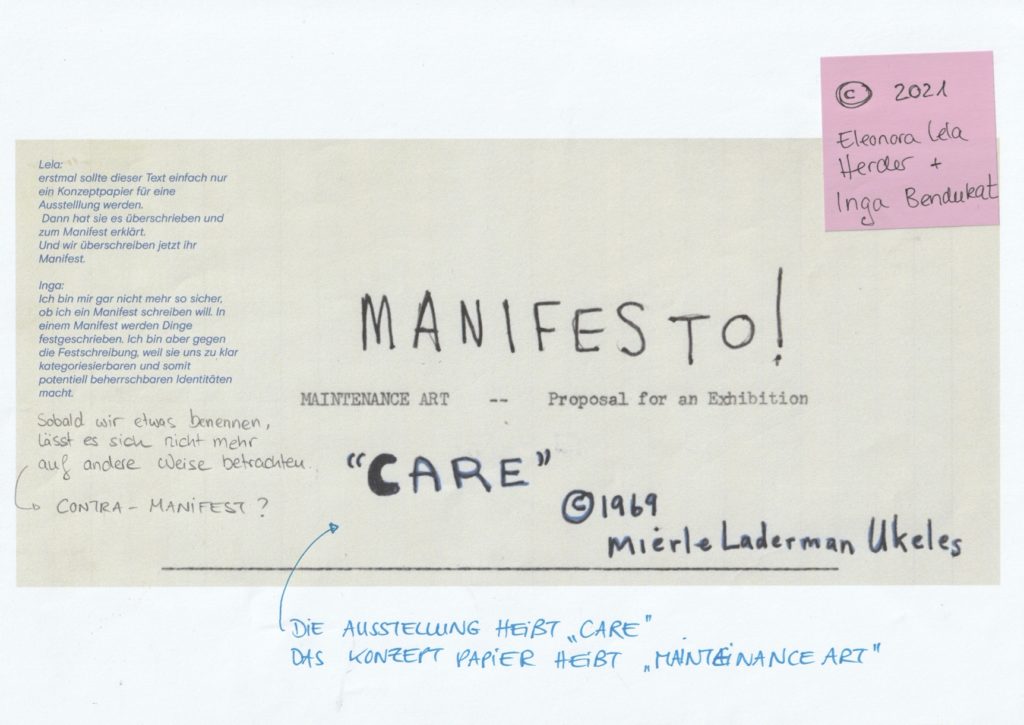
Rechercheprojekt und Umschreibprojekt von Inga Bendukat und Eleonora Herder zum ‚Manifesto! Maintenance Art. Proposal for an Exhibition‘ von Mierle Laderman Ukeles, gefördert von der takecareresidenz Fonds Daku und Künstlerhaus Mousonturm. Februar bis April 2021.
2. ART AS LABOUR – Über Kunst, Mutterschaft und Institutionskritik
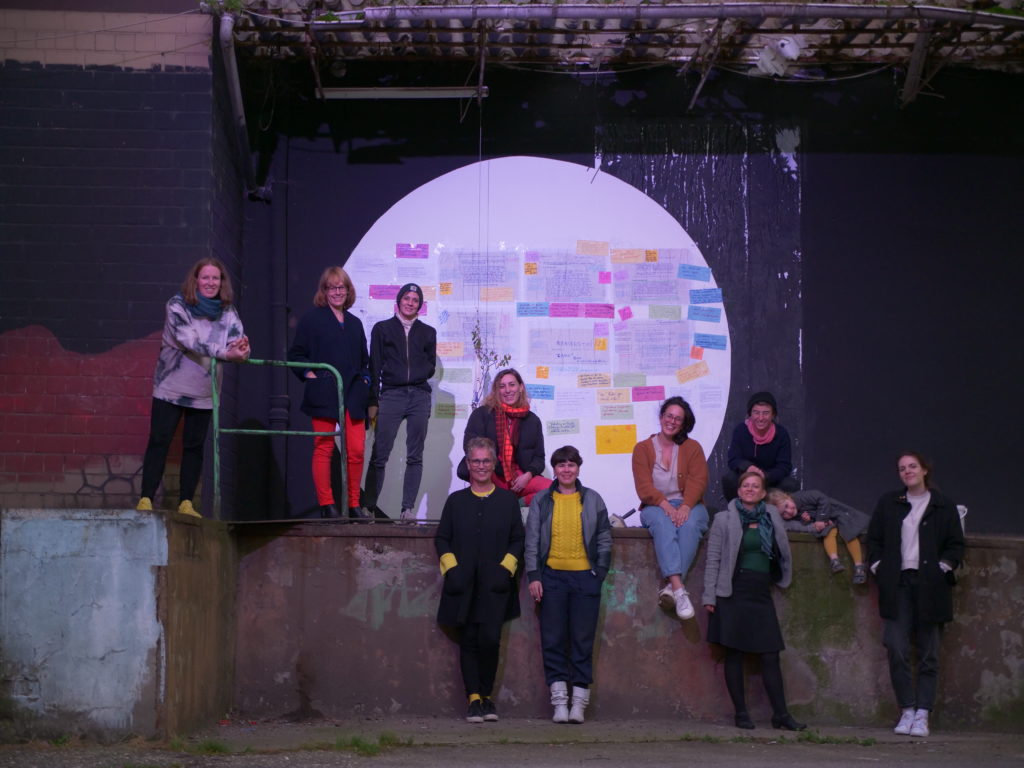
Diskursformat und Publikation im Rahmen von „Care City“, Wunder der Prärie Festival 2021, Mannheim. Inga Bendukat und Eleonora Herder gemeinsam mit Kompliz*innen.
3. AKADEMIE DER RADIKAL SORGETRAGENDEN
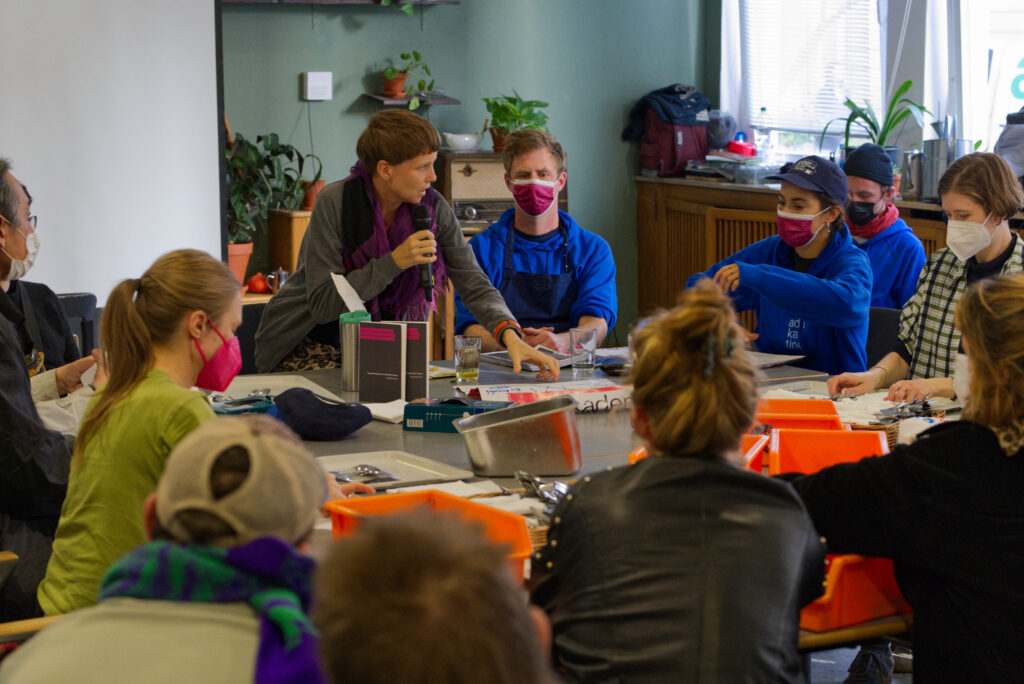
Performatives Symposium mit Vorträgen, Workshops, Konzert, Diskussionen und gemeinsamen Essen in der ada_kantine in Frankfurt am Mannheim zum Thema radikale Sorgearbeit, Care Piracy und Kunst als Sorgearbeit. Im Rahmen der Politik im Freien Theater Festivals 2022.
Nouria Behloul, Inga Bendukat, Eleonora Herder und Tim Schuster gemeinsam mit ada_ist*innen und Kompliz*innen.
4. Workshop – WE HAVE NO ART: WE DO EVERYTHING AS WELL AS WE CAN
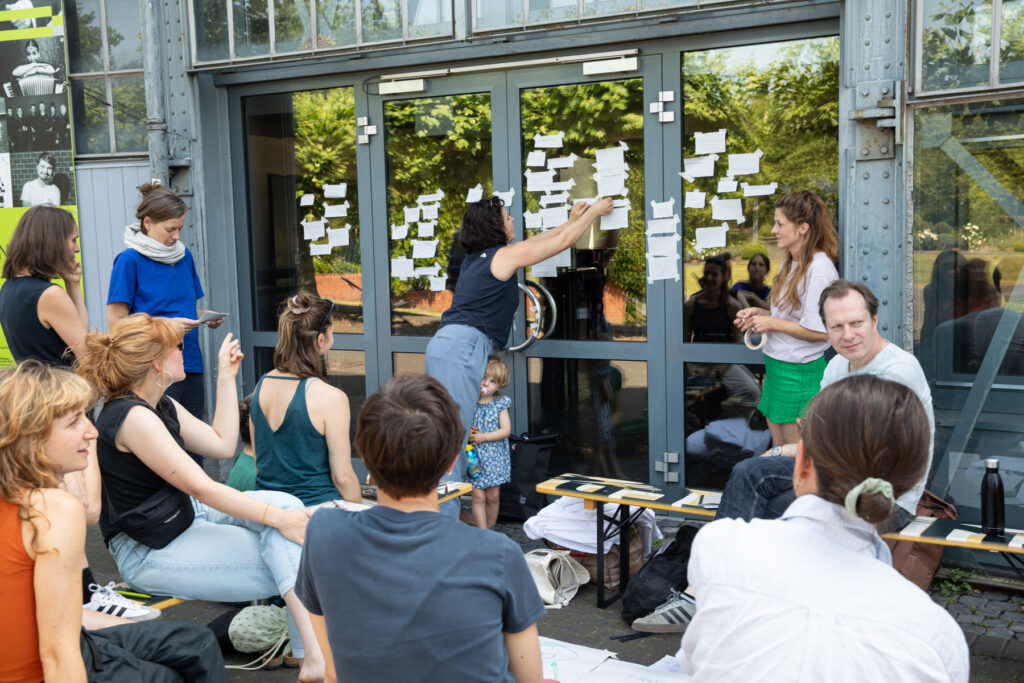
Ein Versuch in Maintenance Art: Workshop mit Studierenden, Akteur*innen aus der künstlerischen Praxis, Dramaturgie und Produktion von Inga Bendukat und Eleonora Herder im Rahmen der Koproduktion Impulse Theater Festival und Cheers for Fears, Mühlheim an der Ruhr 2023.