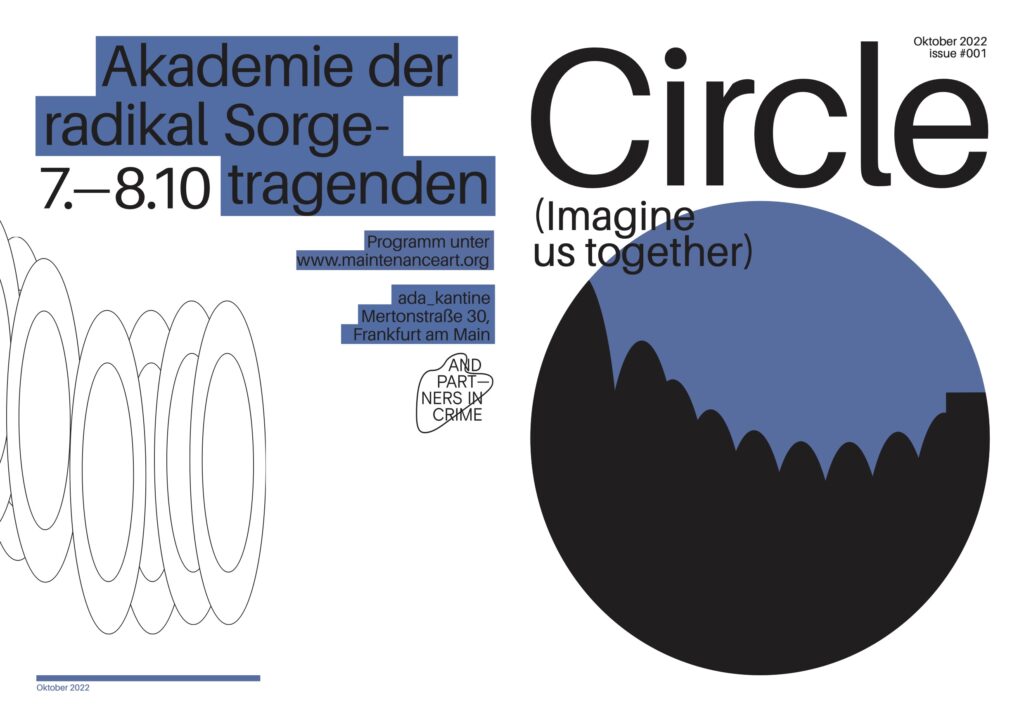
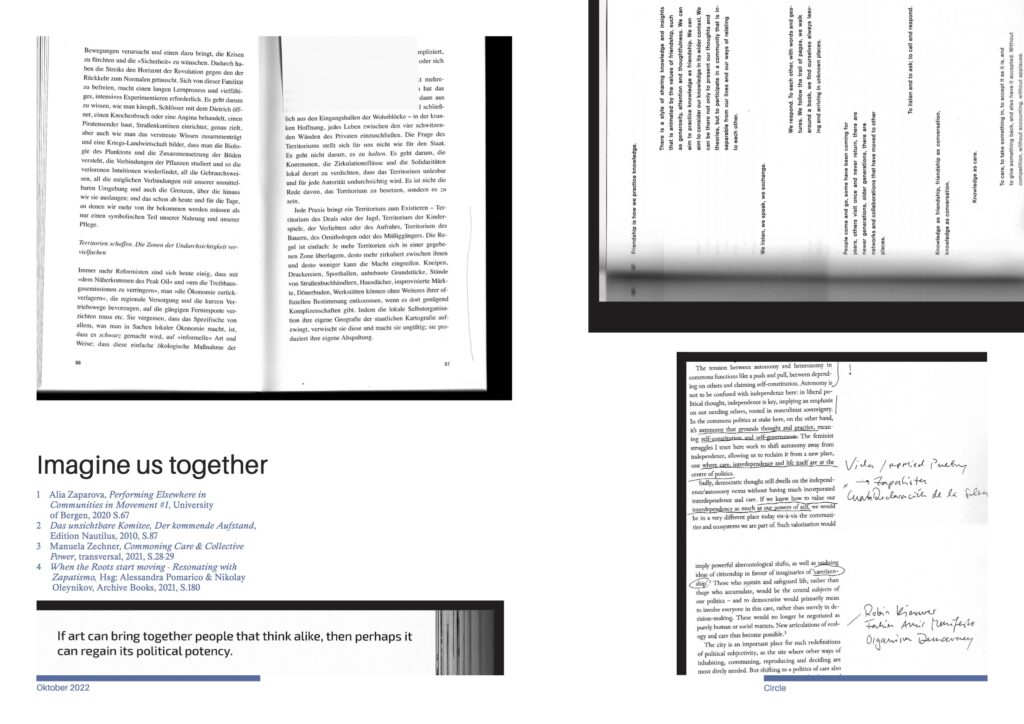
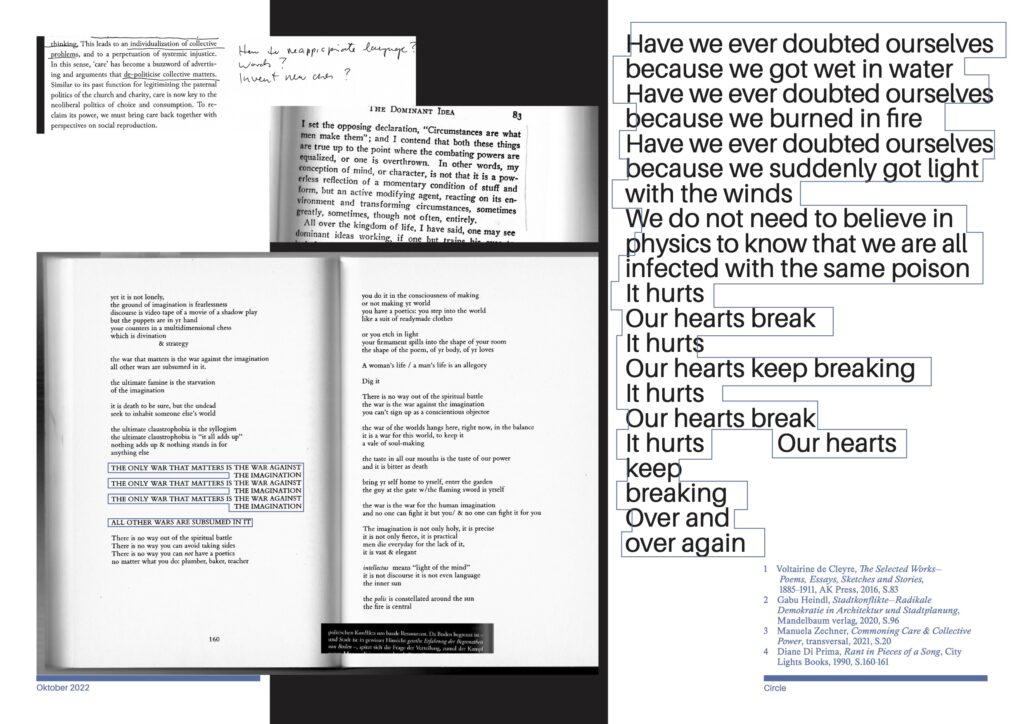
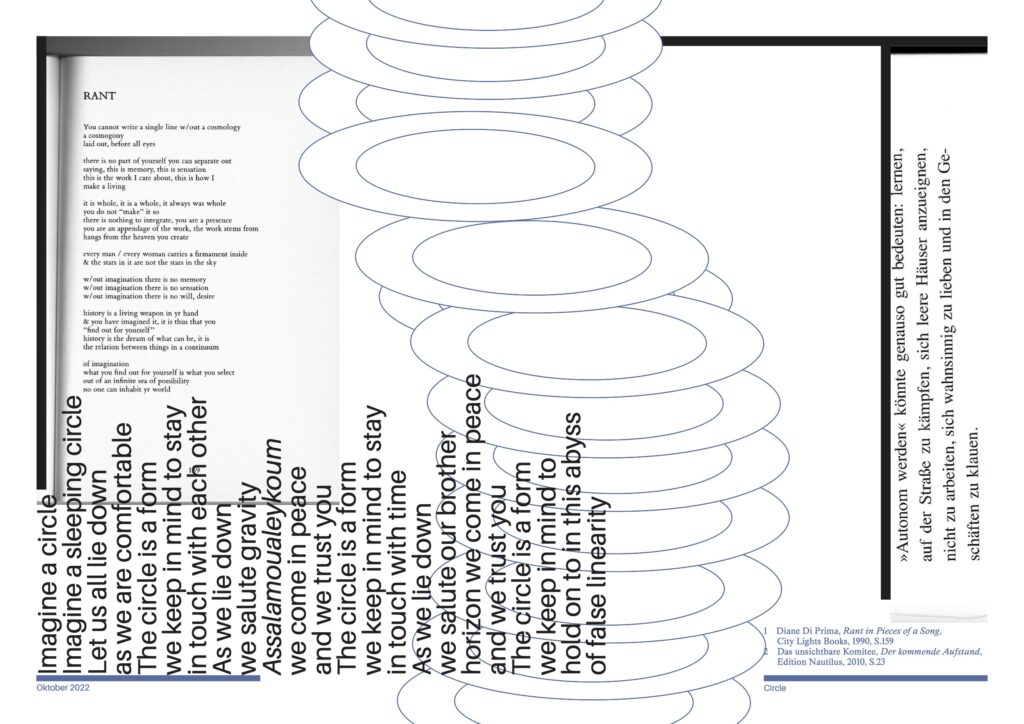
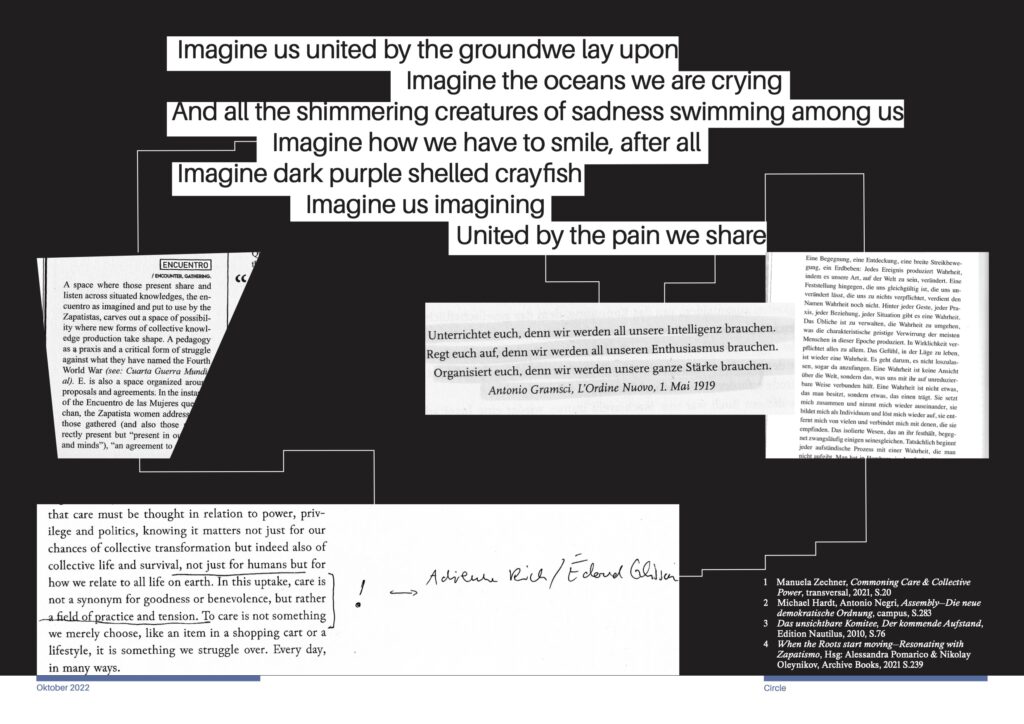
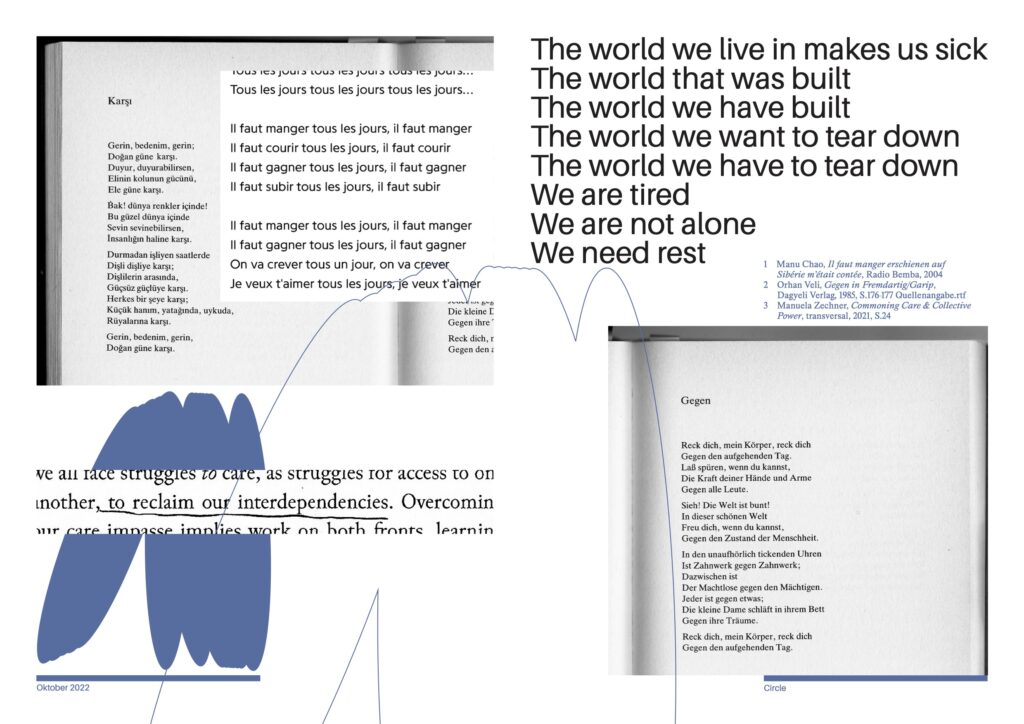
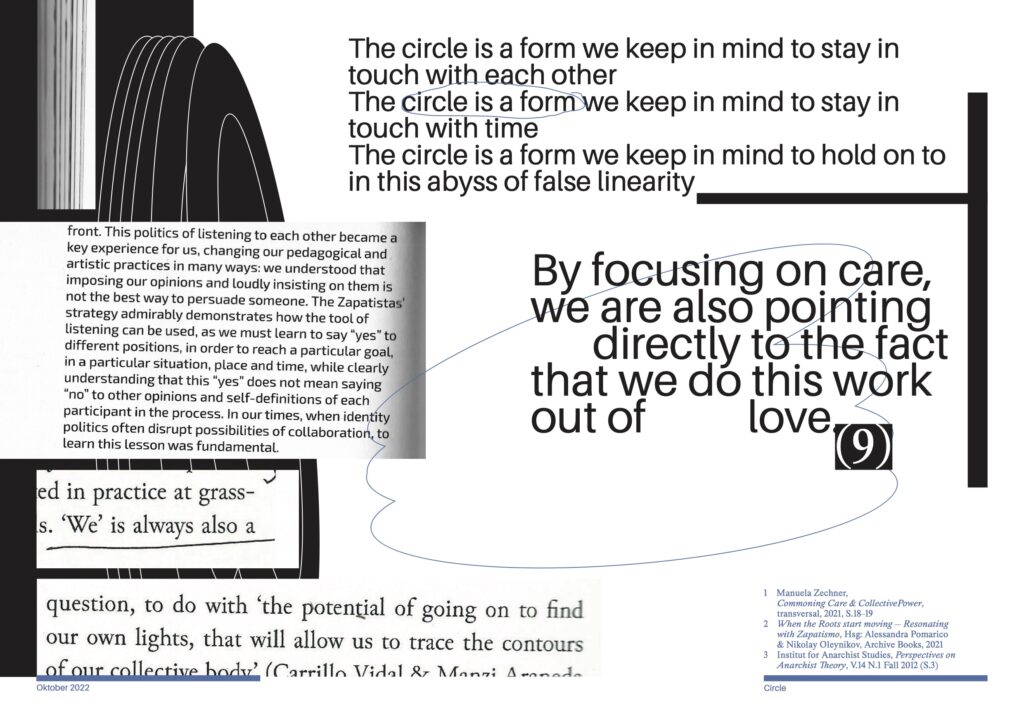
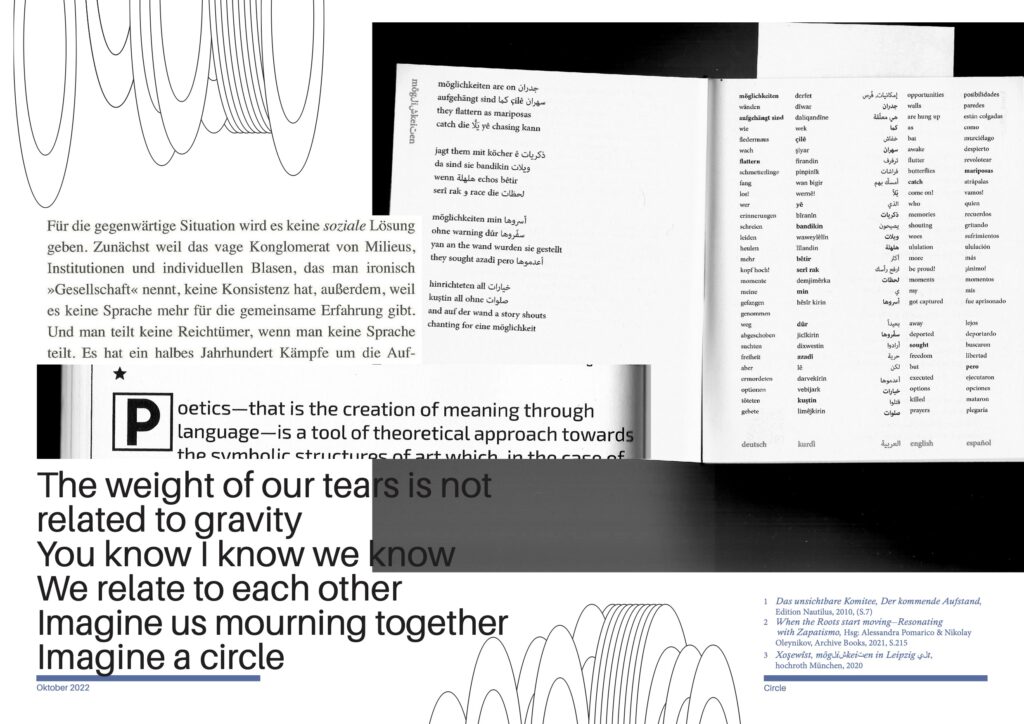
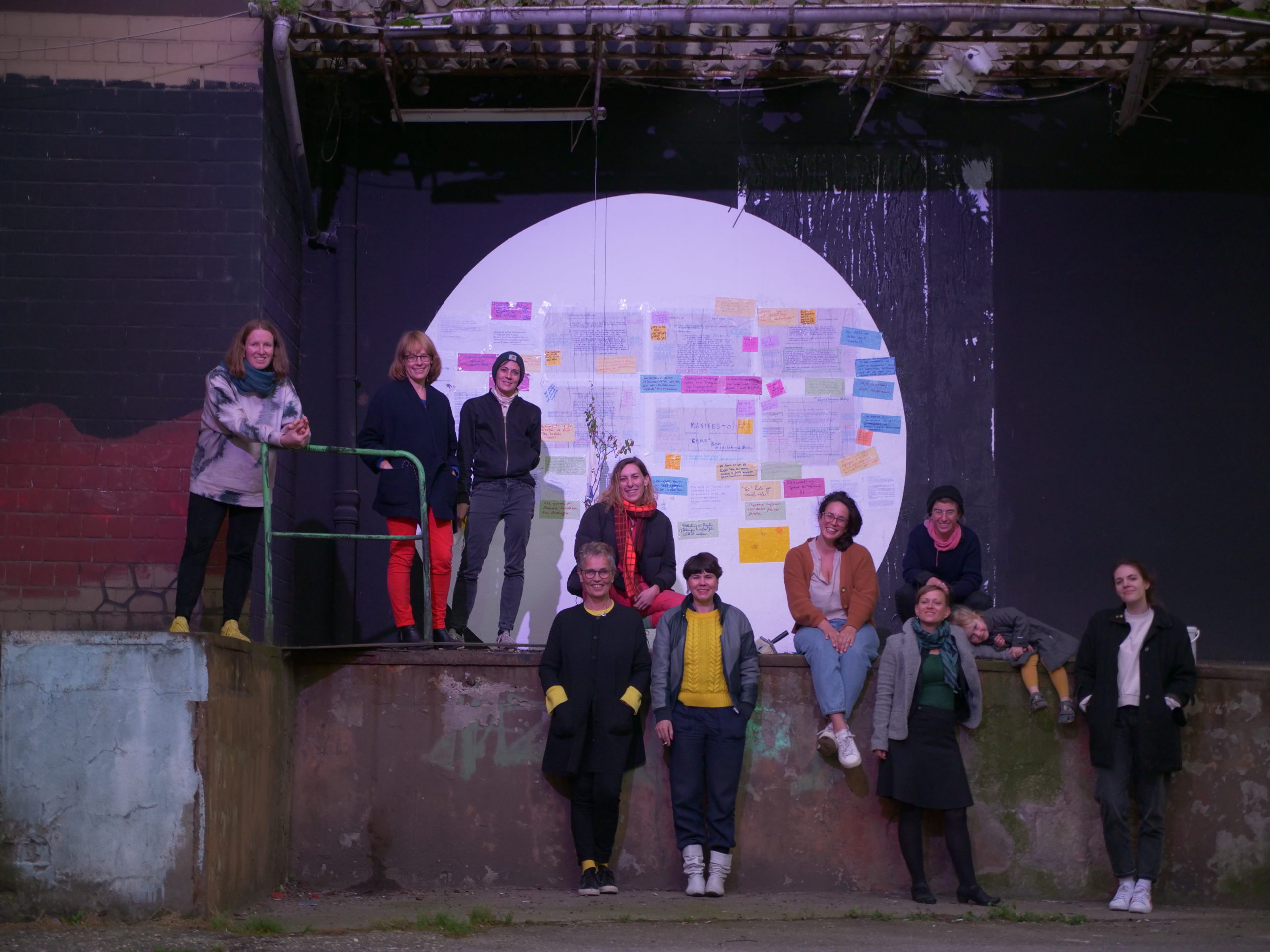
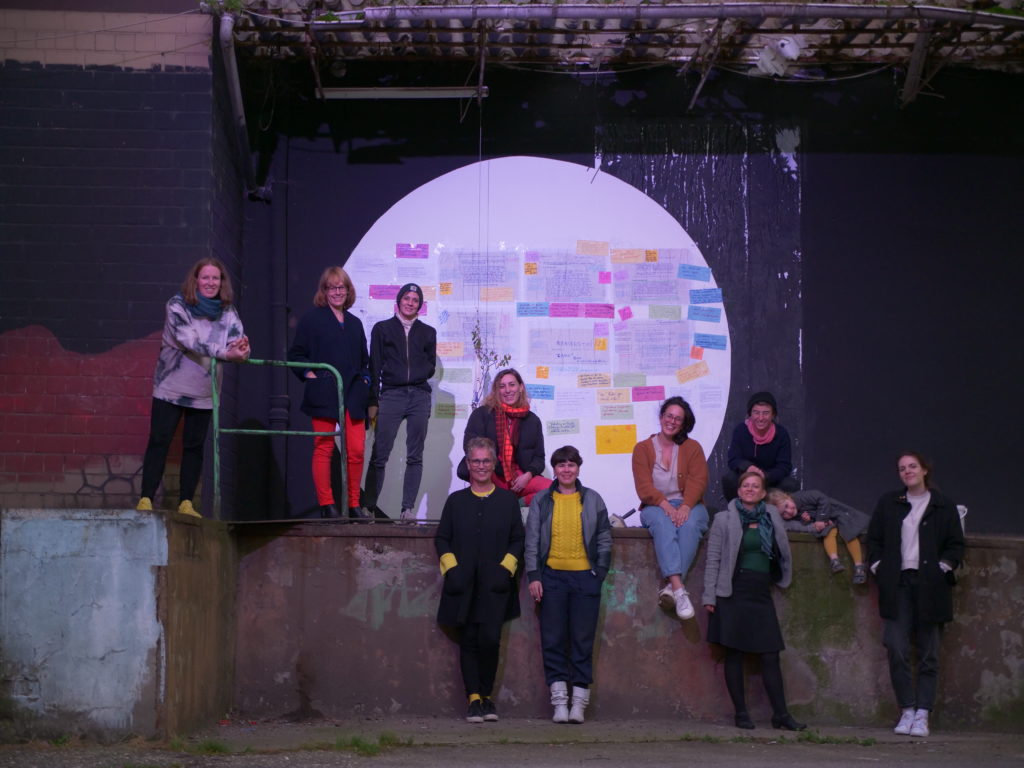
Circle (Imagine us together) ist Teil der Akademie der radikal Sorgetragenden, einem performativen Symposium von andpartnersincrime in Kooperation mit der ada_kantine im Rahmen des Festivals Politik im Freien Theater, gefördert vom Fonds Darstellende Künste aus Mitteln der Beauftragten der Bundesregierung für Kultur und Medien im Rahmen von NEUSTART KULTUR. andpartnersincrime wird gefördert durch die Mehrjahresförderung des Kulturamts der Stadt Frankfurt.
ART AS LABOUR – Mutterschaft als Institutionskritik.
Diskursformat und Publikation im Rahmen von „Care City“, Wunder der Prärie 2021, Mannheim.
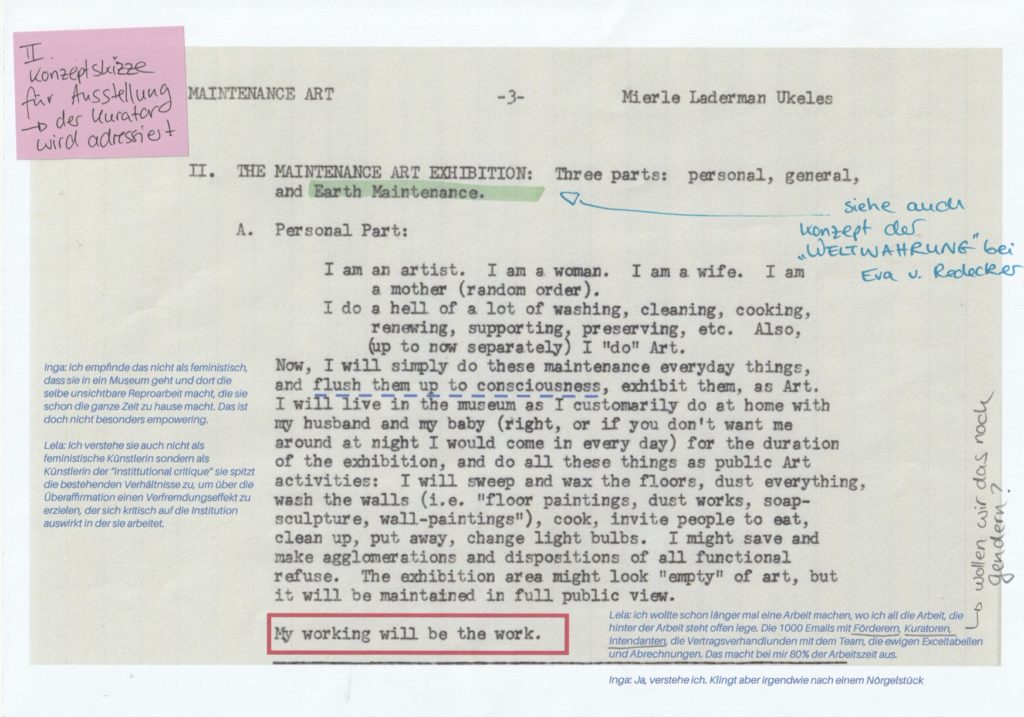
Die Künstlerin Mierle Laderman Ukeles musste Ende der 1960er Jahre erfahren, dass Künstlerin und Muttersein als zwei sich gegenseitig ausschließende Seinsweisen auf dem freien Kunstmarkt galten.
Über fünfzig Jahre später ist Ukeles Kritik immer noch aktuell: Künstler*innen, die auch Mütter sind, gelten als nicht verlässlich und weniger belastbar, als Risiko für Produktionsprozesse. Wie müsste eine Kunstinstitution aussehen, die Reproduktion und nicht Produktion in das Zentrum ihres Kunstverständnisses stellt? Wie kann Mutterschaft und Sorgearbeit im Kunstbetrieb sichtbar gemacht werden? Wie lassen sich den neoliberalen Produktionsformen der Kunstbranche Strategien der Instandhaltung entgegensetzen?
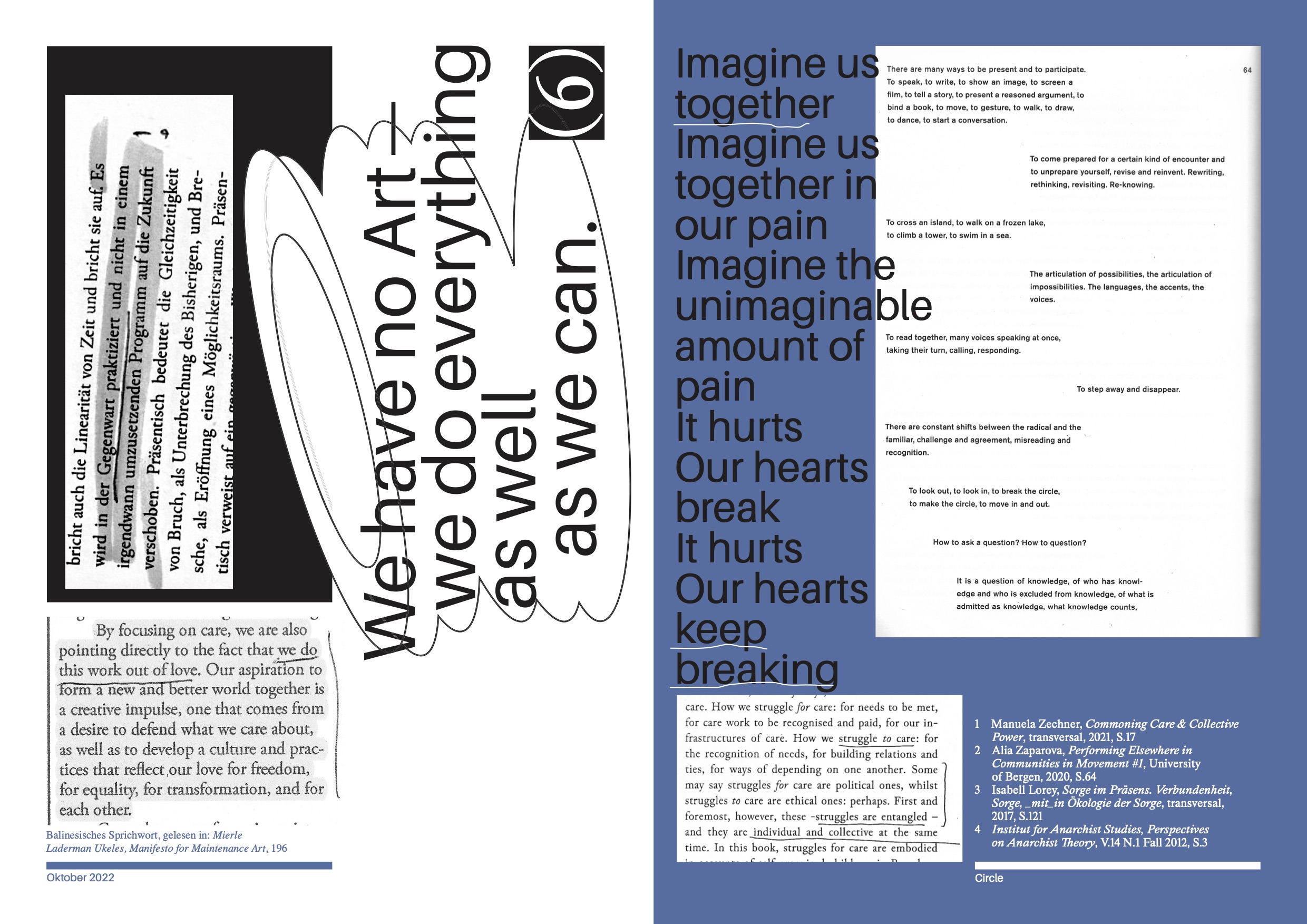
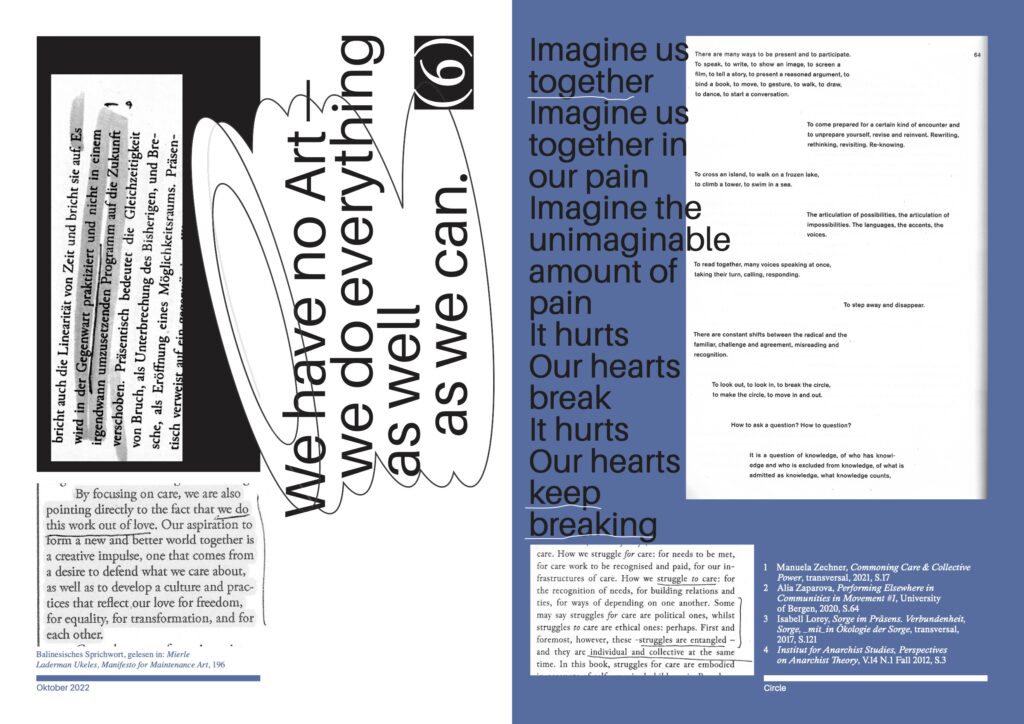
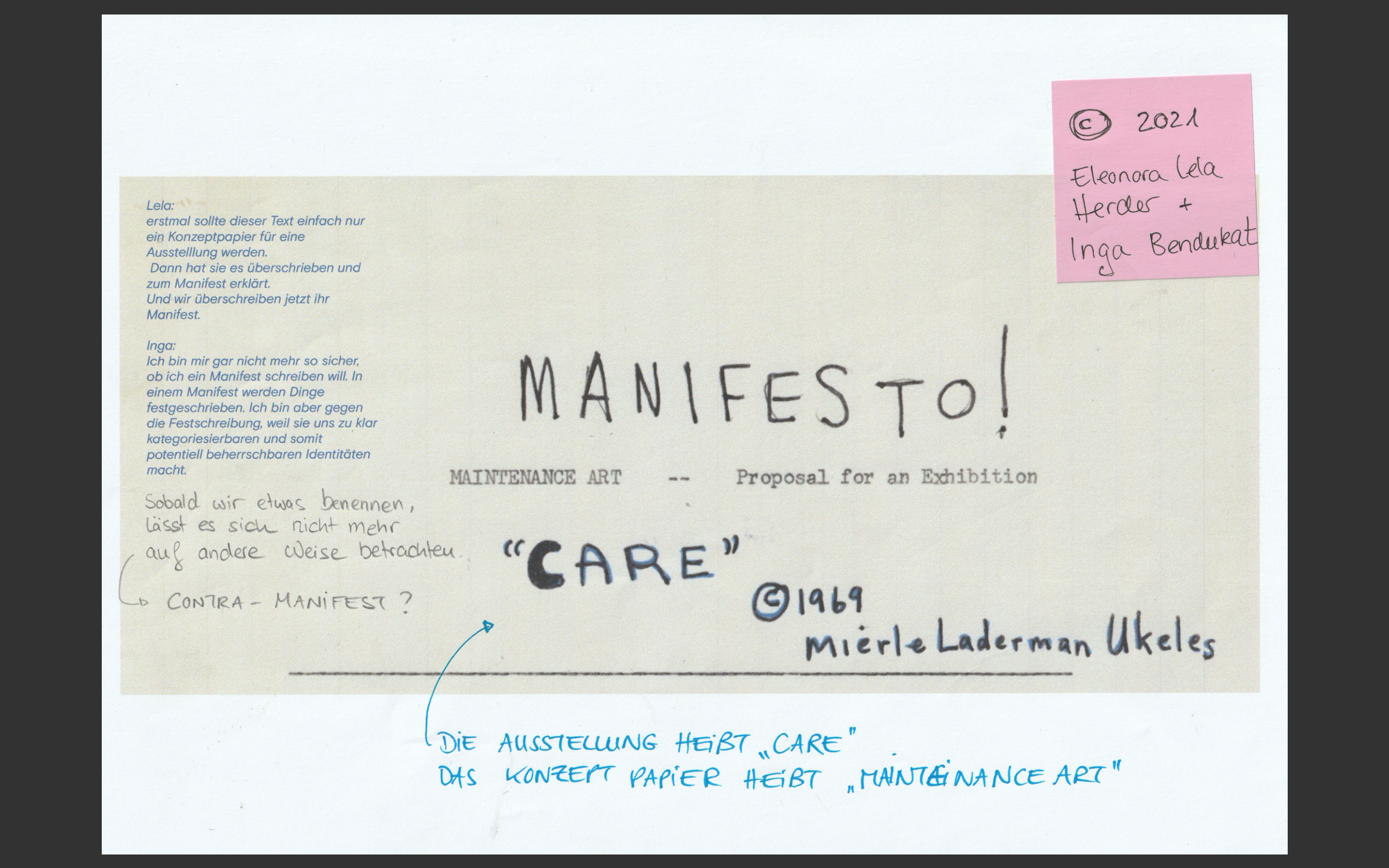
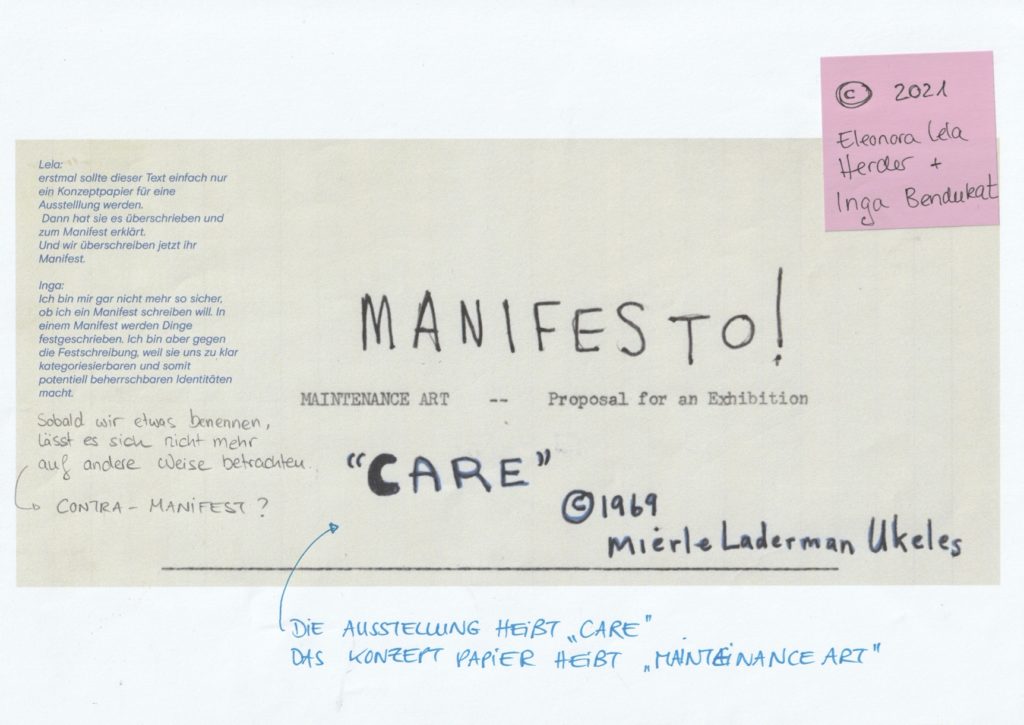
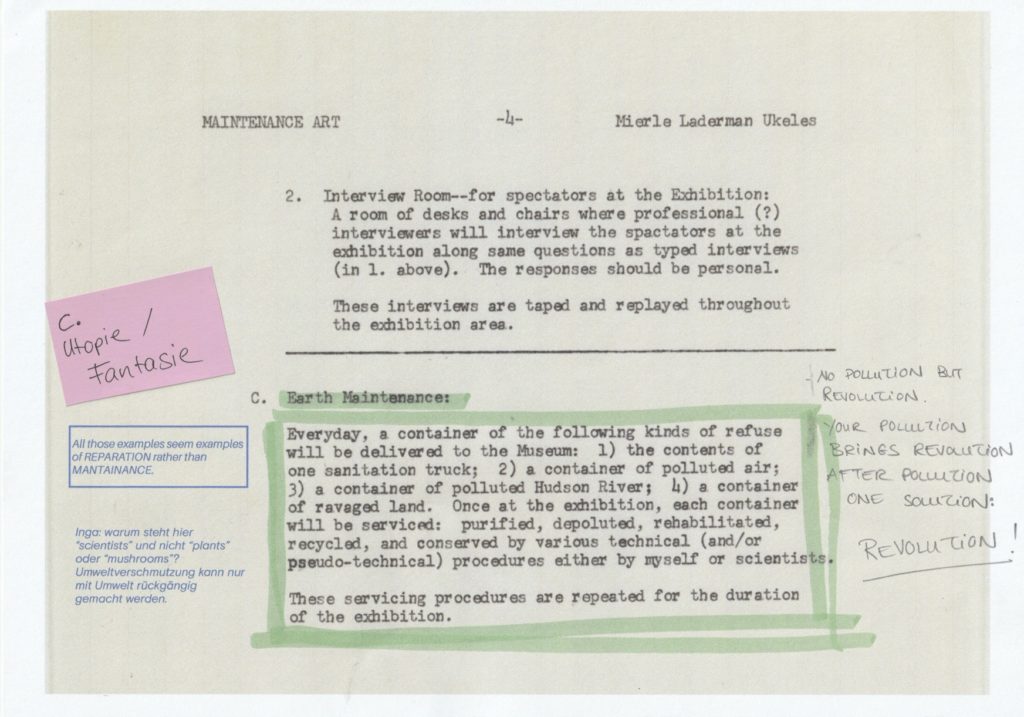
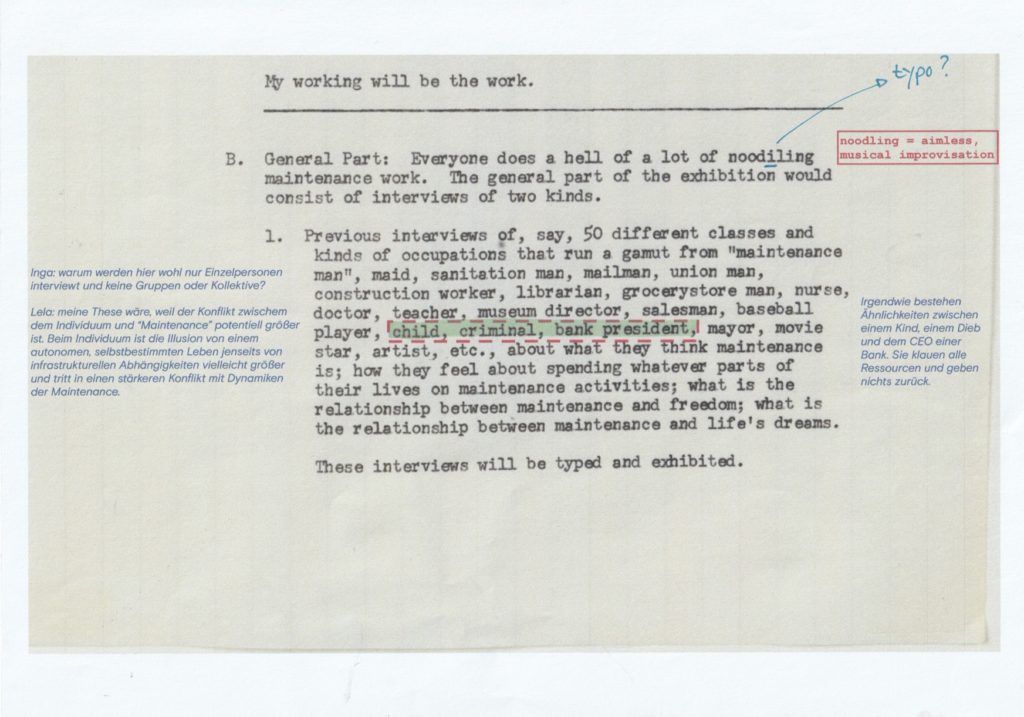
Eleonora Herder und Inga Bendukat von andpartnersincrime haben gemeinsam mit Kompliz*innen aus Kunst, Aktivismus und Theorie dazu eingeladen, das »Manifesto for Maintenance Art« zu diskutieren, zu aktualisieren und umzuschreiben und neue Forderungen zur Vereinbarkeit von Sorgearbeit und Kunst aufzustellen.
Mit Inputs von Marcia Breuer (Künstlerin und Initiatorin »Mehr Mütter für die Kunst«), Hannah Cooke (Künstlerin), Katrin Hylla (Regisseurin und Co-Verfasserin des Care Manifestes von 2018), Magdalena Kallenberger (Mitglied von MATERNAL FANTASIES), Olivia Hyunsin Kim (Performerin und Regisseurin), Mary Jirmanus Saba (Filmemacherin und Geografin, Mitautorin von »Why Call It Labor?«).
Die während der Akademie entstandene Publikation gibt es hier zum Download.
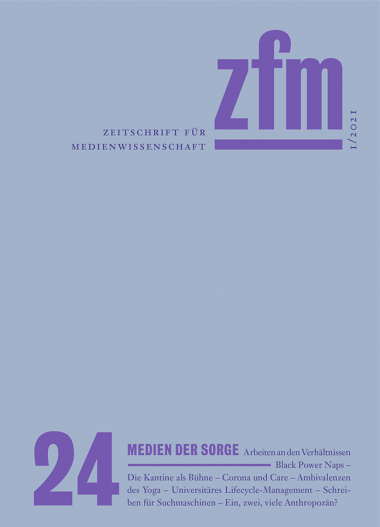
In der 24. Ausgabe der Zeitschrift für Medienwissenschaften reden wir über unsere Erfahrung mit der ada_kantine. In dem Gespräch zwischen Eleonora Herder, Tim Schuster, Inga Bendukat, Phries Künstler und Jana Mangold geht es um die Rolle von (uns als) Künstler*innen bei einem sozialen Nachbarschaftsprojekt. Thema des Hefts MEDIEN DER SORGE sind Praktiken und Techniken des Kümmerns und der Besorgnis, aber auch Politiken von Affekten, Formen der Regierung und ihre Verschränkungen.
Infos zum Heft und den Artikel als Gratis-pdf gibt es hier.
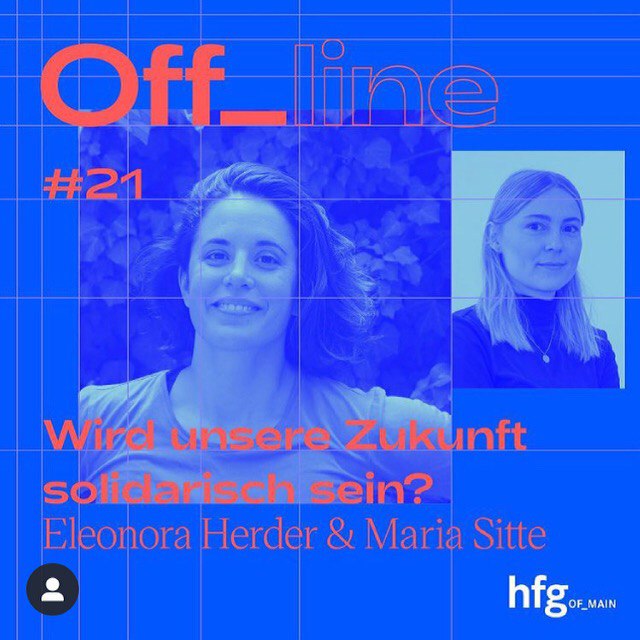
Die Pandemie hat die gesellschaftliche Spaltung weiter vertieft. Wie können wir eine solidarische Zukunft gestalten, in der niemand mehr in prekären Verhältnissen leben muss? Gemeinsam mit der Dramaturgin und Künstlerin Eleonora Herder und der Co-Moderatorin dieser Folge, Maria Sitte, sprechen wir über ihr Label »andpartnersincrime«, die Rolle des Theaters in der Öffentlichkeit, Interventionen in den verwalteten Stadtraum sowie neue Formen der widerständigen Zusammenarbeit. Wie können wir unser gesellschaftliches Zusammenleben anders verhandeln? Wie lassen sich Lücken in unseren sozialen Netzen durch Fürsorge und Solidarität schließen? Und wie agiert die Kunst in diesem Feld, wenn sie nicht zur Sozialarbeit werden will, sondern sich ein widerständiges Potential erhält? Und was hat das alles mit Kochen und leckerem Essen zu tun? Eleonora Herder studierte Theaterregie in Barcelona und Krakau und absolvierte ihr Masterstudium am Institut für Angewandte Theaterwissenschaft in Gießen. Sie agiert unter dem Label »andpartnersincrime«. Dieses gehört zu den 6 Gründungsinitiativen der ada_kantine, einer solidarischen Kantine in der ehemaligen Akademie der Arbeit. Maria Sitte ist wissenschaftliche Mitarbeiterin an der HfG Offenbach und Teil des kuratorischen Teams der Ausstellung »Aus heutiger Sicht«. Moderation: Felix Kosok
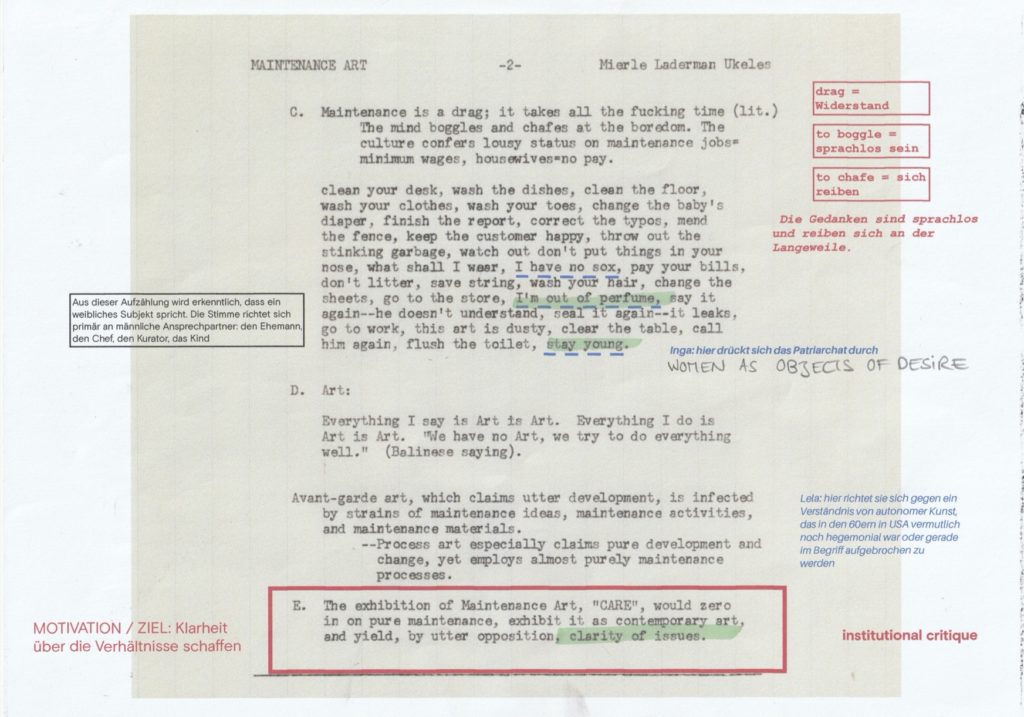
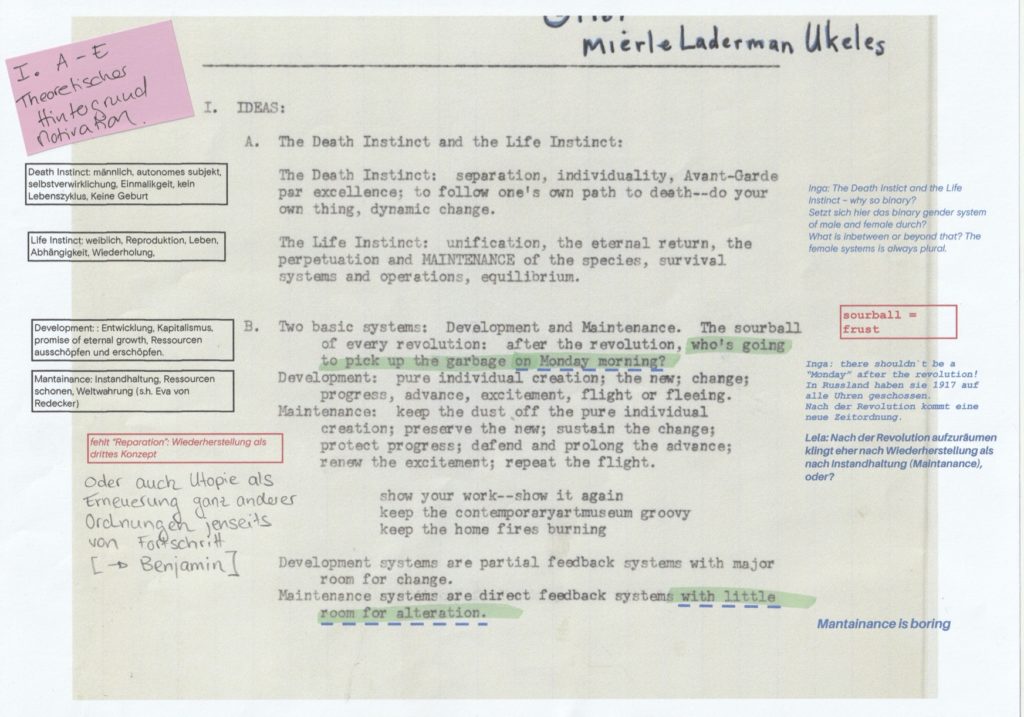
Die bildende Künstlerin Mierle Ladermann Ukuele fragte bereits im Jahr 1969 in ihrem ‚Manifesto of Maintenance Art‘ was Kunst bedeutet, wenn sie sich als Sorgearbeit versteht. Ein zentraler Satz Ukeles, der uns dabei immer wieder umtrieben hat, war ihre Frage: „After the revolution, who’s going to pick up the garbage on Monday morning?“ Wer trägt die Sorgearbeit für die Revolution, für die Versammlung? Wer ist da, aber niemals sichtbar? Und inwiefern können diese Körper, die nicht verhandelt werden, Teil unserer künstlerischen Praxis werden? Was ist das für eine Versammlung, wenn diejenigen zusammenkommen, die sind, die im Theater erstmal nicht vorgesehen sind? Und wer sagt, dass diejenigen überhaupt im Theater erscheinen wollen? Wie müssen Institutionen strukturiert sein, damit diejenigen, die die Sorgearbeit für die Kunst tragen, auch Teil der Kunst sind? Wo und in welchen Formen kann in alltäglichen, in einer Routine performten Sorge- und Instandhaltungsarbeit ein künstlerisches Moment liegen?
Anhand dieser Fragestellungen arbeiten wir zurzeit an einer Aktualisierung des Manifestes von Ukeles aus gegenwärtiger feministischer und queerfeministischer Perspektive. Wir möchten uns mit anderen Künstler*innen, die sich auf der Schnittstelle zwischen Kunst und Community-Arbeit bewegen, vernetzen und mittels Interviews versuchen zu erörtern, welche räumlichen und zeitlichen Begebenheiten erforderlich sind, um Maintenance Art auf einer institutionelle Ebene zu ermöglichen. Wir möchten fragen, wie wir das System der Institutionen unterlaufen müssen, um die zu tragende Sorgearbeit als Teil der künstlerischen Praxis zu verstehen.
In Kooperation mit dem Künstlerhaus Mousonturm. Ermöglicht durch die #takecareresidenz des Fonds Darstellende Künste
Eleonora Lela Herder is working as a freelance director, curator and dramaturg in Frankfurt Main, Barcelona and Warsaw. Her work oscillates between performance and spatial installation. In her current work she deals with urbanist and city political topics.
She is the founder and artistic director of the interdisciplinary label andpartnersincrime and a member of the artist association ID_Frankfurt, where she also co-curated the site-specific performance festival IMPLANTIEREN in 2018 and 2020.
She received a scholarship at Theatertreffen Berlin in 2015 and at Bienal del arte Buenos Aires in 2017.
I’m an artist, I’m a manager, I’m an employer, I’m a woman, I’m a wife, I’m a lover, I’m a friend, I’m going to be a mother, I’m a daughter, I’m a sister, I’m a granddaughter, I’m a scholar, I’m a teacher at university, I’m the cool aunt, I was an emerging artist, I’m an activist, I’m a target [kind of random order]
Inga Bendukat is a theater scholar, freelance dramaturg, and in her free time, an activist. She is currently working on her PHD: „Jenseits der repräsentativen Öffentlichkeit. Erscheinungsräume des Anderen (working title).“ In it, through the perspective of queer theory she examines the disruption of idelologies and searches for a theater of Entunterwerfung (Foucault), resistance and solidary practice. Since March 2021 she receives a scholarship from Ad Infinitum at the Goethe University.
Am I an artist? I am a theorist [but not terrorist]. I am an activist. [I wish] Radical queer [all your friends are criminals]? I am a dreamer, planing the revolution from my desk. [no order]
Lela und Inga haben sich während der gemeinsamen Arbeit an und in der ada_kantine näher kennengelernt. Während Inga das Projekt auf einer theoretischen Ebene begleitet hat, hat Lela gemeinsam mit ihrer Gruppe andpartnersincrime immer wieder versucht mit performativen Setzungen die Grenzen zwischen Kunst und Reproduktionsarbeit auszuloten. Daraus entstanden ist ein mehrteiliges Projekt zu Themen der Versammlung und Kunst als Vergemeinschaftung, das im vergangenen Jahr am Künstlerhaus Mousonturm und dem Historischen Museum Frankfurt gezeigt wurde.
Gefördert vom Kulturamt der Stadt Frankfurt und dem #takecare Stipendium des Fonds Darstellende Künste.
Zu Gast bei „red park“ „Run the dish“
Für Ukeles stehen das Künstlerin- und Mutterdasein für zwei sich ausschließende Dynamiken des In-der-Welt-seins.
Avantgarde Künstler*innen sind autonom, progressiv und voranschreitend, sie definieren sich über ihre Einmaligkeit und müssen scheinbar unabhängig von materiellen Begebenheit agieren können.
Mutterschaft hingegen steht bei ihr für ein zyklisches System der Instandhaltung, für Abhängigkeit und Einschränkungen, für Routine, für Langeweile, für ein Agieren in einem Netz von Interdependenzen.
Kunst (so wie von der westlichen Moderne definiert) und Sorgearbeit sind sich also von ihrem Grundwesen her konträr und nicht vereinbar.
Seit einigen Jahren erfahren aber gerade Kunstformate, welche versuchen, diese Gegensätzlichkeit aufzuheben einen gesellschaftlichen Aufschwung. Immer mehr Künstler*innen versuchen aus der Dynamiken der ewig temporären, selbstreferentiellen Projektarbeit auszusteigen und ihre politischen und gesellschaftliche Anliegen in das Zentrum ihrer Arbeit zu stellen, immer mehr Kunstinstitutionen kommen nicht zuletzt aufgrund von schwindenden Besucher*innenzahlen in einen Legitimationsdruck und versuchen mit partizipativen, soziokulturellen Formaten ihr eigenes Schneekugeldasein zu verlassen.
Allen ist bewusst, dass wir als Gesellschaft dringend einen instandhaltenden Umgang mit den räumlichen und menschlichen Ressourcen, die uns zur Verfügung stehen, erproben müssen.
Leider gehen diese sozialen Experimente von Kunstinstitutionen nicht selten mit einer symbolischen Ausbeutung von prekarisierten und marginalisierten gesellschaftlichen Gruppen oder ihrer expliziten Exponierung einher. In den wenigsten Fällen wird hier so gearbeitet, dass es sich als nachhaltig und gesellschaftliche Zustände verändernd erweist. Zu oft wird die im Kunstmarkt übliche neoliberale Erschöpfung von menschlichen Ressourcen damit einfach auf weitere Kreise der Stadtgesellschaft ausgeweitet. Eine Instandhaltung findet nicht statt. Eine Neuformulierung ebenso wenig.
In: Jörn Schafaff/Benjamin Wihstutz (Hg.), Sowohl als auch dazwischen: Erfahrungsräume der Kunst, München: Wilhelm Fink 2015
Ästhetische Erfahrungsräume sind als Zwischenräume zu begreifen, die sowohl Aspekte des realen als auch des gedachten Raums aufweisen. Die Entgrenzung der Künste hat im 20. Jahrhundert dazu geführt, dass oftmals unterschiedliche Raumkonzepte
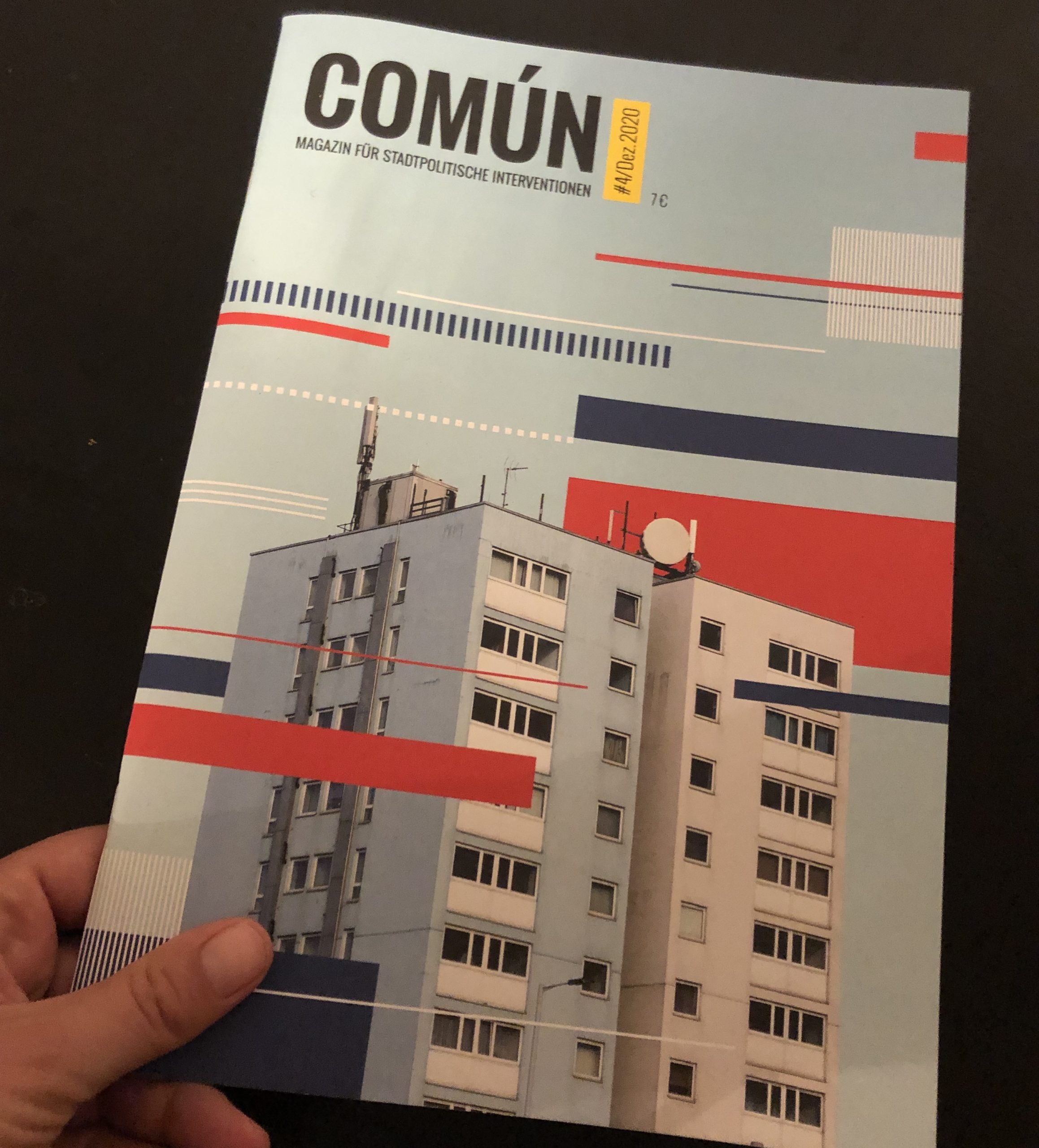
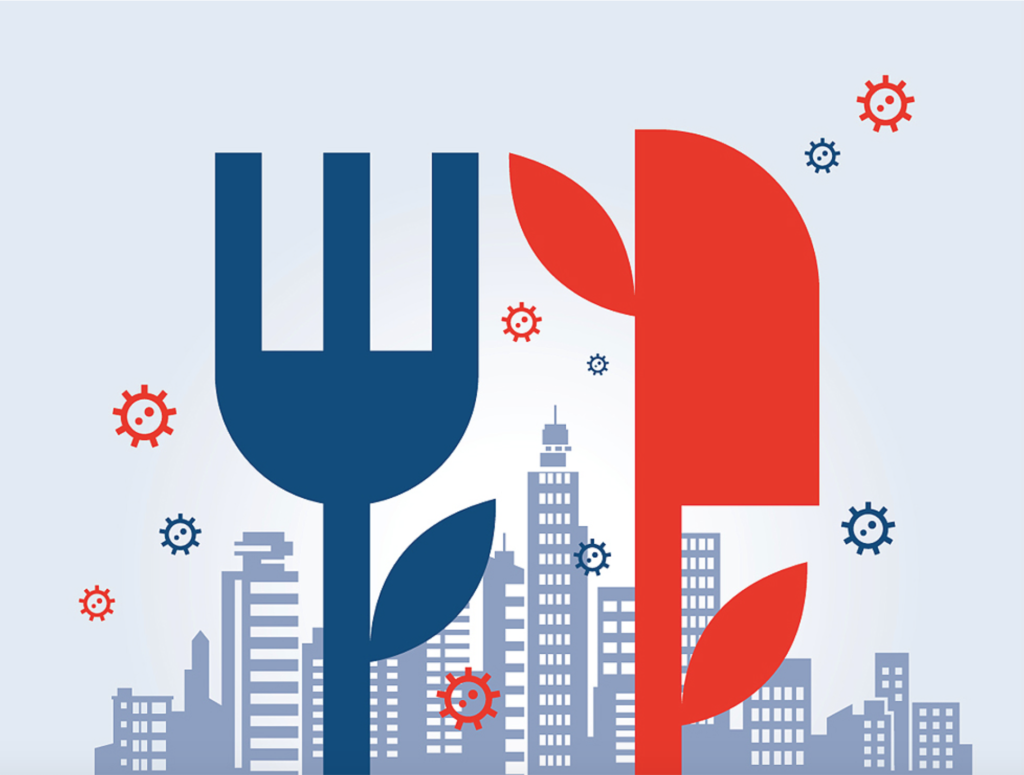
Mitten in der Coronakrise eröffnete die selbstorganisierte »ada_kantine« in Frankfurt/Main. Ein Beitrag von Eleonora Herder und Yannik Böckenförde in dem Magazin der Común Magazin für stadtpolitische Interventionen
Im März 2020 brachen mit der Ausbreitung des Corona-Virus Grundlage und Gegenstand unserer künstlerischen Arbeit weg: Das Theater und die parlamentarische Politik. Zuerst wurden alle Theaterveranstaltungen abgesagt, dann wurde der Aufenthalt von Gruppen mit mehr als fünf Personen im öffentlichen Raum verboten. Die Gesellschaft wurde in sogenannte Kernfamilien aufgeteilt und die Menschen vergruben sich in digitale Höhlen, in welchen das Weltgeschehen lange Schatten an die Wände warf.
Ende Mai – mitten in der gesellschaftlichen Schockstarre des Lockdowns – kaperten wir dann zusammen mit einigen Nachbar*innen die leerstehende ehemalige „Akademie der Arbeit“ in Frankfurt. Die vom Gewerkschaftsbund gegründete Institution, die hier seit den 1920-Jahren Arbeiter*innen Zugang zu politischer Bildung ermöglichte, besaß nicht nur eine professionell ausgestattete Großküche, sondern auch einen geräumigem Speisesaal und einen anliegenden Garten.
Mittlerweile haben sich über 100 Aktivist*innen dem Projekt angeschlossen und seitdem kochen wir drei Mal die Woche ein veganes Mittagsessen auf solidarischer Preisbasis und geben an manchen Tagen bis zu 150 Mahlzeiten an bedürftige Menschen und Nachbar*innen raus.
Der erste Lockdown hatte deutlich gemacht, wie wichtig die sorgetragenden Einrichtungen sind, aber auch wie schnell sie wegbrechen können und dass der Hashtag stayhome für viele nur nach einem schalen Witz klingt. Und nicht zuletzt hat uns die Pandemie schmerzhaft vor Augen geführt, wie vereinzelt wir alle leben. Wir wollten nach dieser Erfahrung nicht zurück in die sogenannte Normalität, die uns eh nie wirklich normal schien. Wir wollten aus der Krise lernen und eine neue Realität einstudieren. Und was wäre ein besserer Ort für ein solches Lernen als eine ehemalige Akademie?
Also gründeten wir Ende August mit Hilfe des reload Stipendiums der Kulturstiftung des Bundes die „Akademie der Versammlung“. Wir luden Referent*innen ein, die ihre eigene Perspektive auf das Thema Versammlung, Wohnungsnot, Theater als aktivistische Praxis, kollektive Reproduktionsarbeit und Kantinen als Kunst mitbrachten. Gemeinsam mit unseren Gästen wurde zwei Tage lang gegessen, diskutiert, gekocht und geputzt.
Während wir unsere Kantine gründeten, passierte an einem anderen Punkt unserer Stadt etwas ähnlich Kurioses. Die Frankfurter Stadtverordnetenversammlung verließ mit ihren 93 Parlamentariern den Plenarsaal des Rathauses und zog in die Kantine der Stadtwerke, wo sich die Sicherheitsabstände besser einhalten ließen. Ähnlich wie in der ada_kantine wurden die Diskussionen ab diesem Moment begleitet von dem Geruch von Eintopf und dem Klappern von Geschirr.
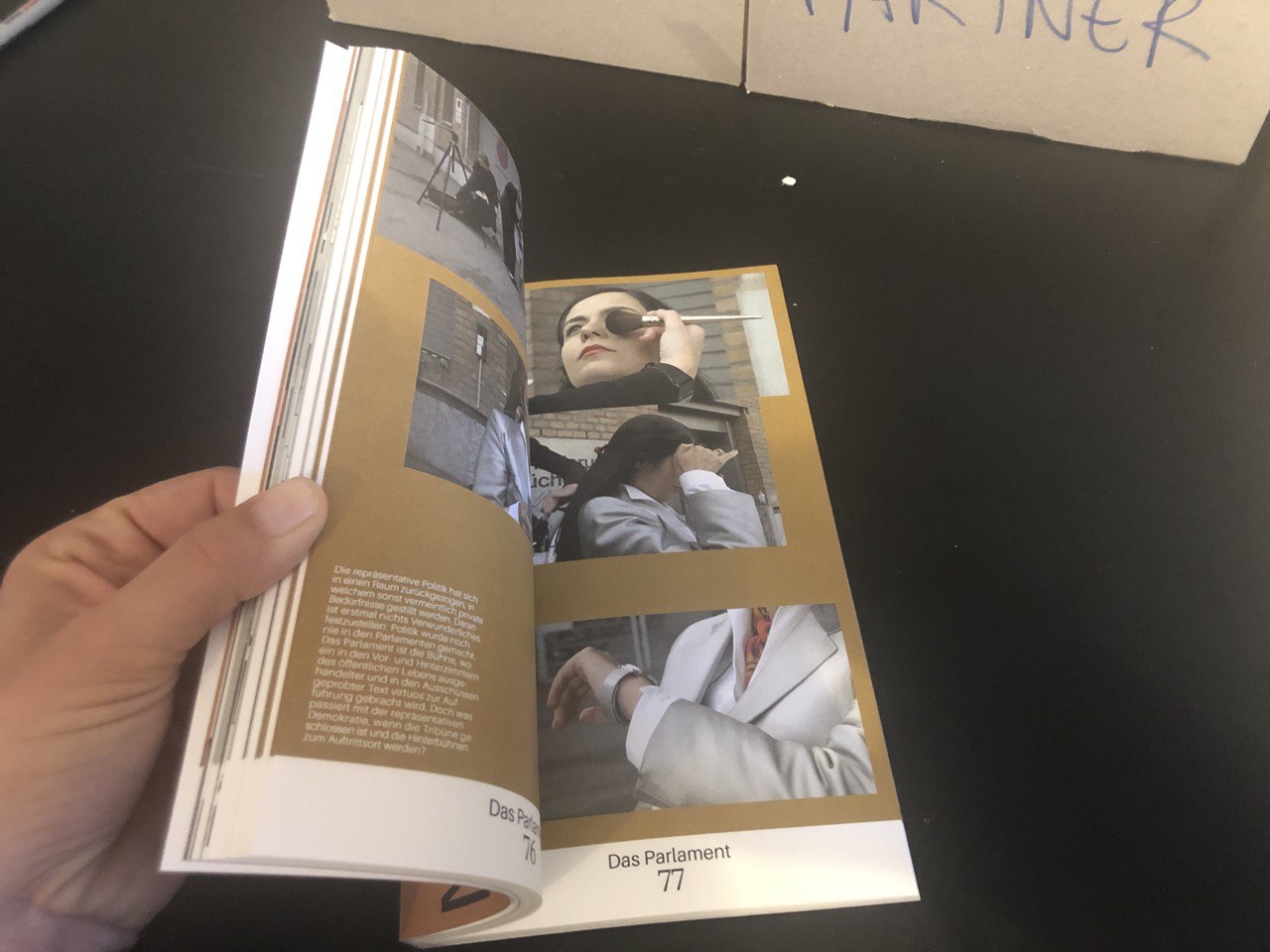
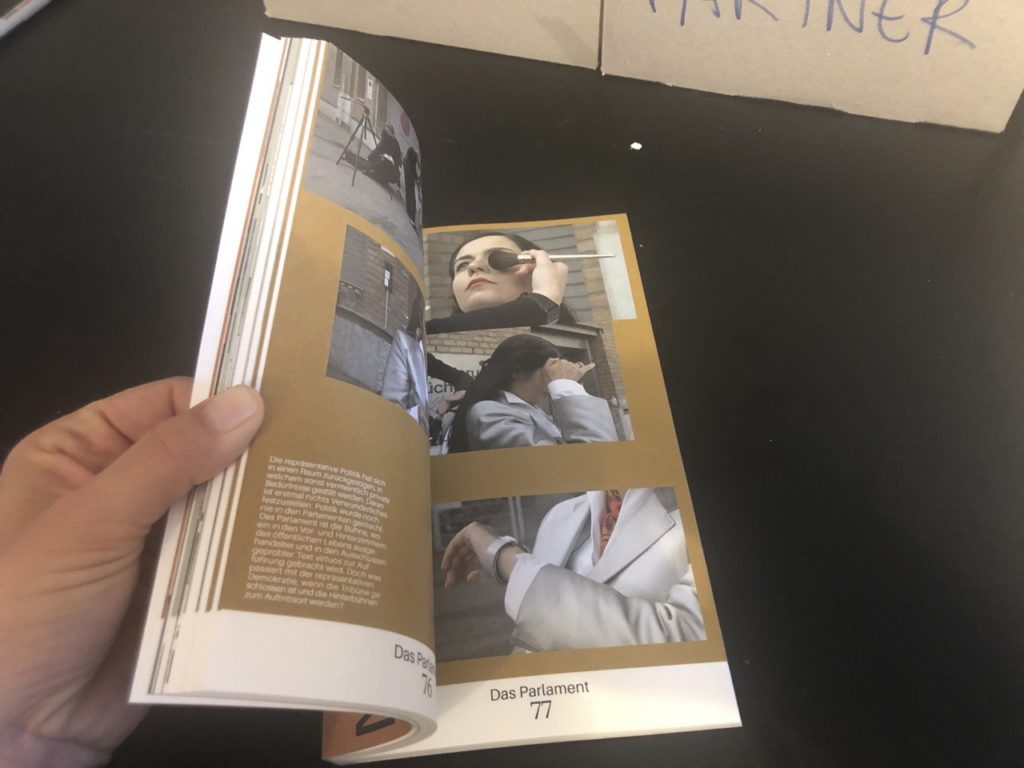
Die Frage nach dem Zusammenhang zwischen Essen und politischer Versammlung begleitete von nun an unsere künstlerische Forschung. Im Fokus standen dabei drei Formen der Versammlung: Die Kantine (oder Küche), das Parlament und das Theater. Wir trafen uns mit Köch*innen, Jurist*innen, Theaterwissenschaftler*innen und Parlamentariern, befragten sie zu ihren Versammlungsformen und versuchten herauszufinden, inwiefern sie sich durch die Pandemie neu erfinden müssen. Einige ihrer Beiträge sind in dem vorliegenden Heft abgedruckt.
Diese Publikation dokumentiert unsere Suche, die Fragen, die wir uns gestellt haben. Wie meistens in den Arbeiten von andpartnersincrime geben wir auch hier keine Antworten, sondern stellen Fragen, streuen den Zweifel und halten uns, im Sinne Donna Haraways an das was wir am Besten können: an die Unruhe.
Die Publikation steht hier zum kostenlosen Download bereit. Das Urheberrecht liegt ausschließlich bei andpartnersincrime.